Life Science Curriculum: 7 Easy Topics For 2nd Grade
You’ve got a science block coming up and approximately zero extra hours to build a whole unit from scratch. Same. Let’s talk about what to actually include in your 2nd grade life science curriculum and how to make it feel manageable without turning your weekend into a curriculum design session.
Life science is one of my favorite units in 2nd grade because the content is genuinely interesting to kids, it connects to things they can see and touch, and there are real hands-on activities that don’t require a hot glue gun or a trip to a craft store. Here are the 7 topics I include in my life science curriculum every year and what actually works in the classroom.
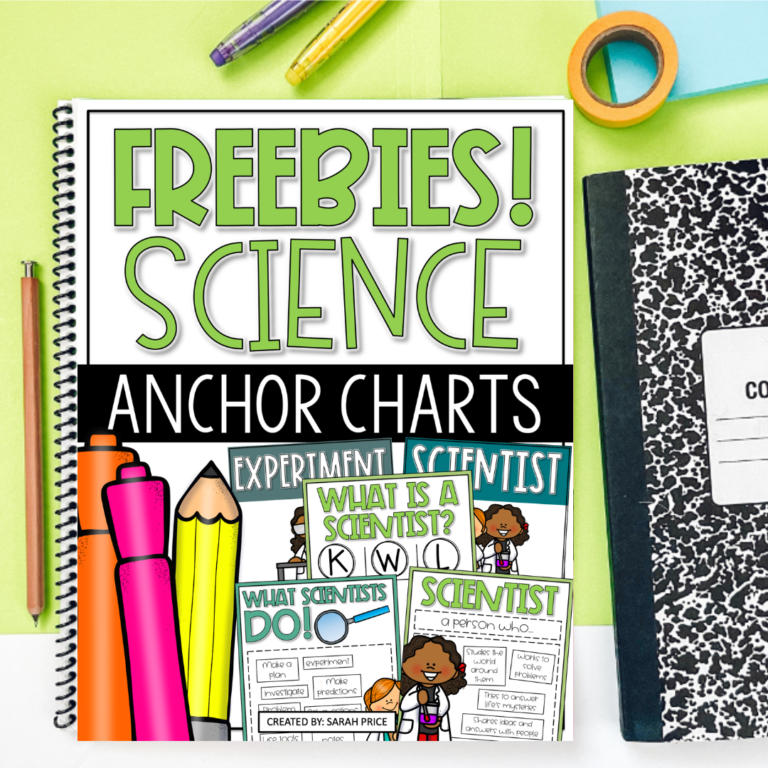
New here? Grab the free yearly science roadmap so you know exactly what to teach and when, then keep reading for the breakdown.
What to teach in your 2nd grade life science curriculum
1. Living vs. Nonliving Things
This is where I always start, and for good reason, it’s the foundation for everything else in the unit. Kids think they already know this one, which means they’ll confidently tell you a fire is alive. (Spoiler: it’s one of the trickier ones.)
I like to give students lots of examples and have them practice explaining their thinking. Not just sorting, but justifying. That “explain why” piece is where the real learning happens.
Want more ideas for this one? These living vs. nonliving activities are worth bookmarking.
2. Needs and Parts of a Plant
Next up: what plants actually need to survive and the parts that help them do it. This one is a great excuse to plant something in class. Even if you only have plastic cups and a windowsill, it works. Kids are unreasonably invested in whether their seed sprouts, and that investment does a lot of the teaching for you.
We pair the hands-on planting with some structured labs so students have something to reference as the unit moves forward.
3. Pollination
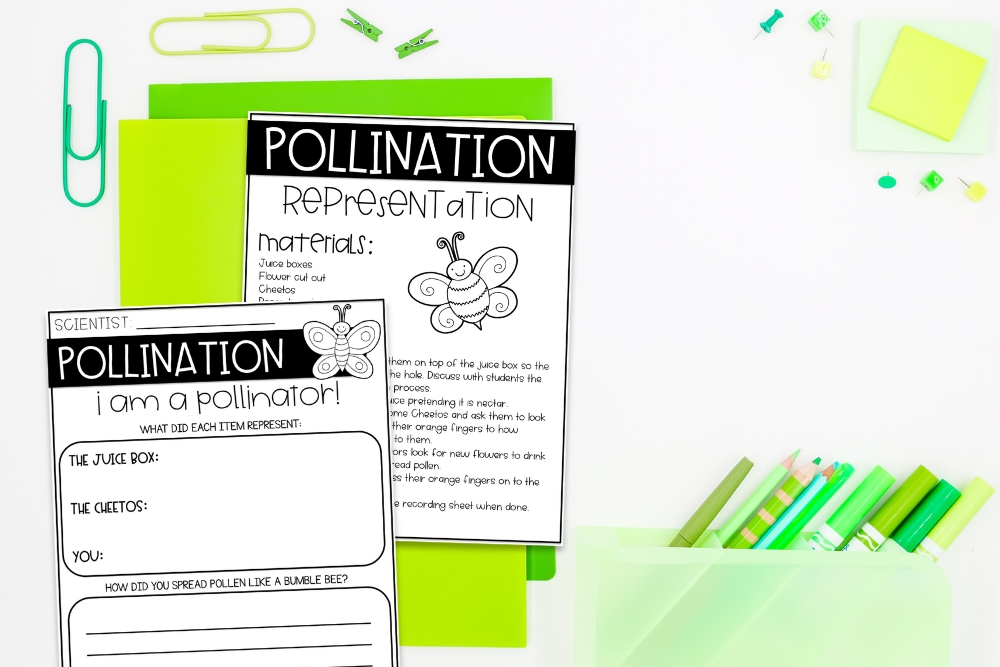
Yes, I teach this in 2nd grade. No, it’s not too advanced. The key is keeping the vocabulary accessible and making it experiential.
My favorite activity: students pretend to be bees, and we use Cheetos and juice boxes to simulate moving pollen between flowers. It’s exactly as chaotic and effective as it sounds. Picture flashcards and short videos also go a long way for getting younger students comfortable with the vocabulary before they have to use it.
4. Life cycles of a plant
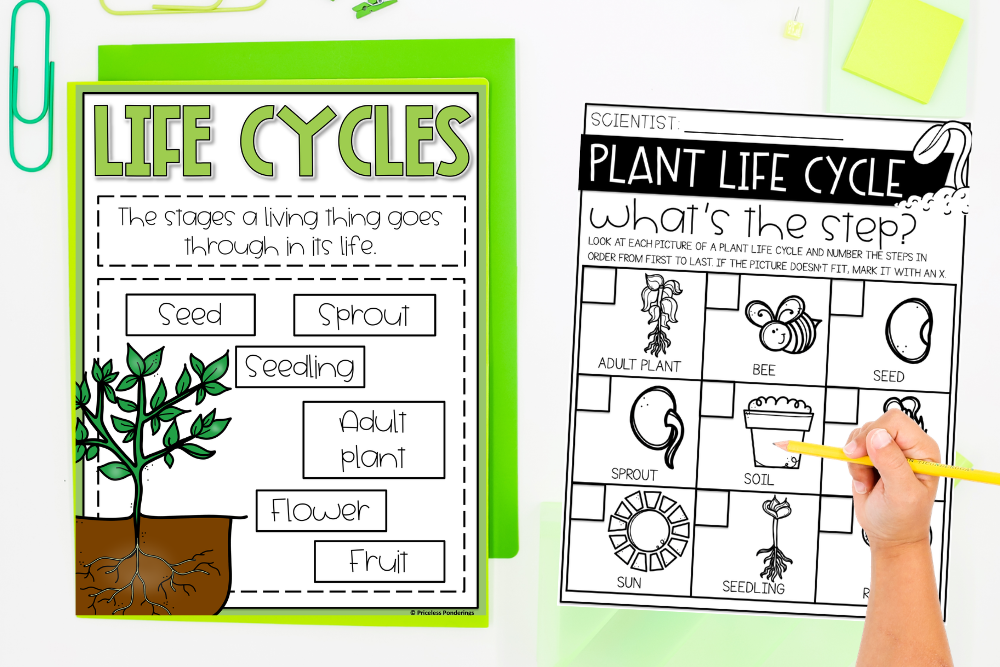
Life cycles are a unit within a unit. There’s so much to explore here. I focus on plants, butterflies, and praying mantis (kids are obsessed with praying mantis, use that).
The activities that land best: interactive anchor charts, labeled diagrams, and cut-and-sort activities. Want more ideas for teaching this one? Check out these plant life cycle activities for 2nd grade.
If you want all of these activities already organized and ready to go, this is exactly what I use: Life Science Curriculum Bundle
Want a Free Science Roadmap?

Planning out your whole science year takes time you don’t have. This free roadmap shows you exactly what to teach and when, so you can stop guessing and just follow a plan.
Yes, send me the free roadmap →
5. Needs of an Animal and Habitats
This is where things open up, depending on your grade-level standards. In 2nd grade, I cover:
- What animals need to survive
- What a habitat is and how to classify it
- Popular habitats around the world
- The climate, plants, and animals you’d find in each
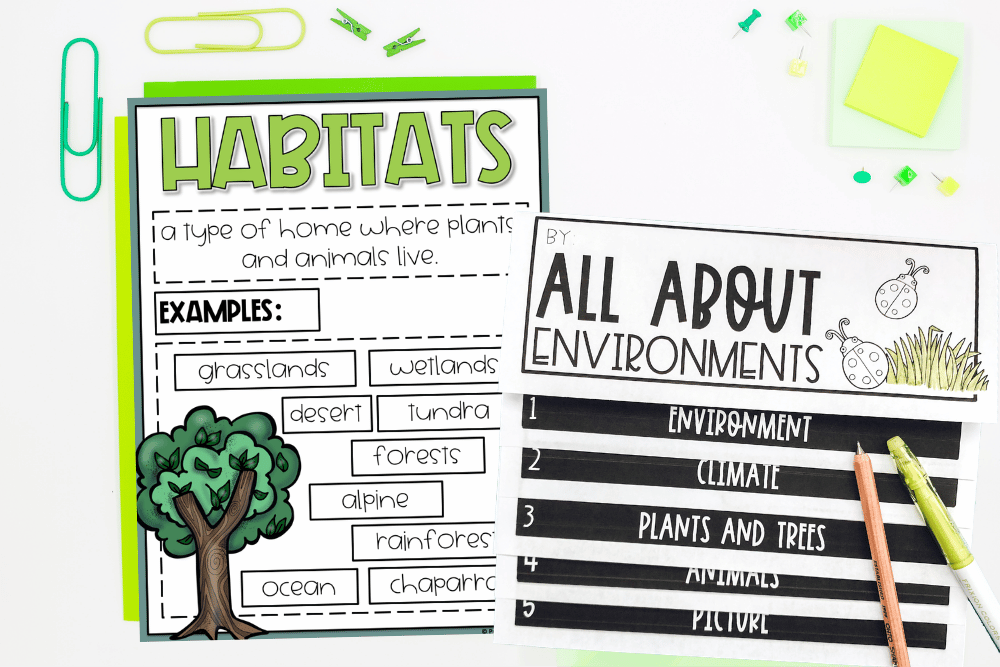
Need activity ideas for this one? These low-prep habitat activities are a good place to start.
Mini research projects are a great fit here. My students do habitat flipbooks, which give them something concrete to reference, make a solid independent activity, and feel way more interesting than a worksheet (even though they’re just as easy to run).
6. Animal Characteristics
My state standards require 2nd graders to understand that animals have unique characteristics that help them survive, so that’s what we focus on. We look at ears, eyes, feet and limbs, teeth, noses, and body coverings across different animals.
The payoff activity: students design their own “super animal” by combining features from different animals, then write a short story about it. It’s creative, it’s writing, and it shows you who actually understood the content. Triple win.
7. Animal Adaptations
Last stop: adaptations, both behavioral and physical. We cover camouflage, hibernation, mimicry, and migration. Then each student gets assigned an animal to study. They dig into its specific adaptations and explain how those traits help it survive.
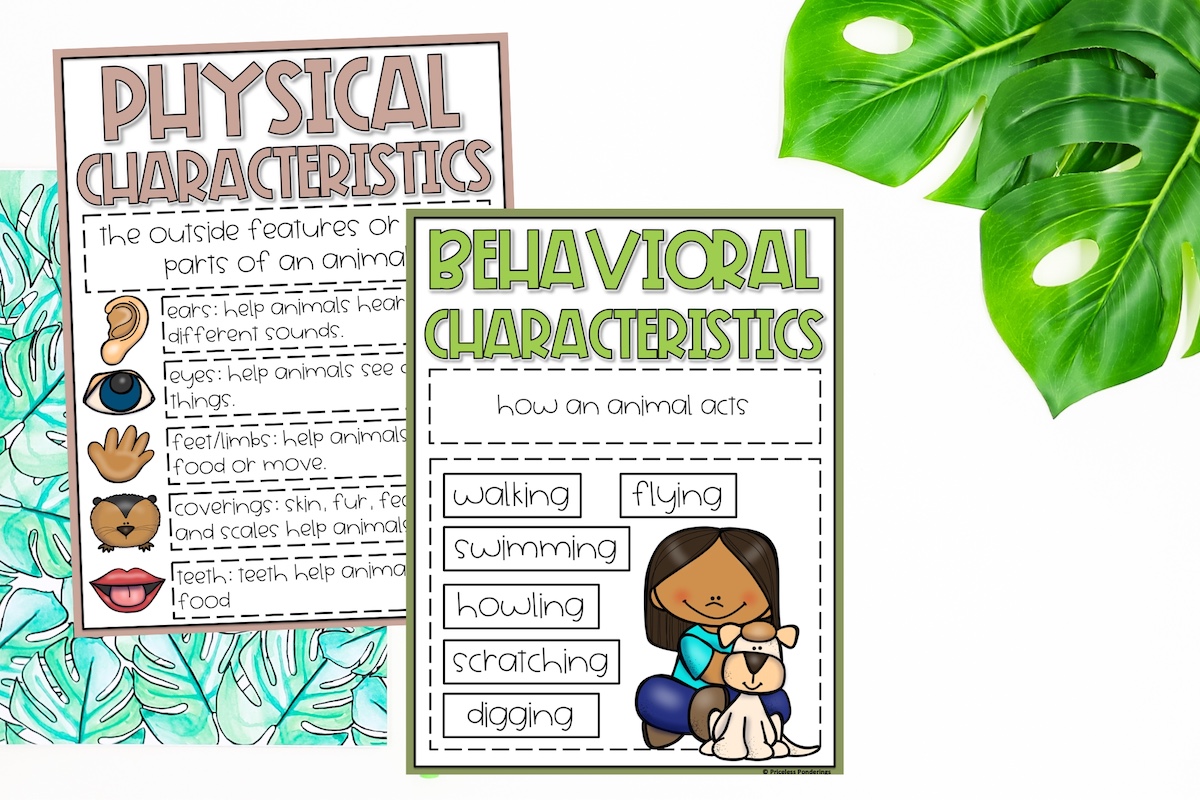
This one is great for differentiation because the depth of the research can scale with the student.
For a deeper dive into this topic, this animal adaptations guide has everything you need.
Ready to Just Teach It?
All 7 of these topics are included in my 2nd Grade Life Science Curriculum Bundle — a complete, done-for-you life science curriculum with everything you need, already planned and ready to print. No building from scratch, no hunting down activities, no Sunday planning spirals.
If you want a digital option for your tech center, the Life Science Digital Pack pairs perfectly with the bundle.
Hopefully, you were able to gather some ideas to incorporate into your 2nd grade life science curriculum. To help you plan out your year, I also created a free yearly overview for science, which makes planning stress-free. Make sure to grab a copy to help simplify your lesson planning!
More posts you’ll find useful:
HANDS-ON POLLINATION ACTIVITIES FOR ELEMENTARY SCIENCE
TIPS FOR TEACHING LIVING VS. NONLIVING THINGS
LOW-PREP HABITAT ACTIVITIES FOR ELEMENTARY SCIENCE
THE ULTIMATE GUIDE: ACTIVITIES FOR ANIMAL ADAPTATIONS AND LESSON PLANS
If you’re starting this unit fresh, living vs. nonliving is the right first move → this post walks you through it step by step.
SAVE THIS PIN
Planning a life science unit? Save this for later so you’ve got it when you need it.
Happy teaching!
Sarah