Texas Social Studies TEKS: A Fun and Simple Geography Guide
Let’s have a little heart-to-heart, teacher friend.
If you’ve ever tried to build a 4th grade Texas social studies TEKS geography curriculum by opening your standards, scrolling to the geography section, and immediately feeling your eye twitch… you’re not alone.
Texas geography is a lot. Regions. Cities. Landforms. Natural resources. Human-environment interaction. Map skills. And somehow, you still only get one social studies block a day.
So today, I want to show you how to teach Texas geography in a way that feels clear, doable, and dare I say… fun. No chaos. No piecing together random worksheets. Just a simple approach that covers the TEKS and keeps your sanity intact.
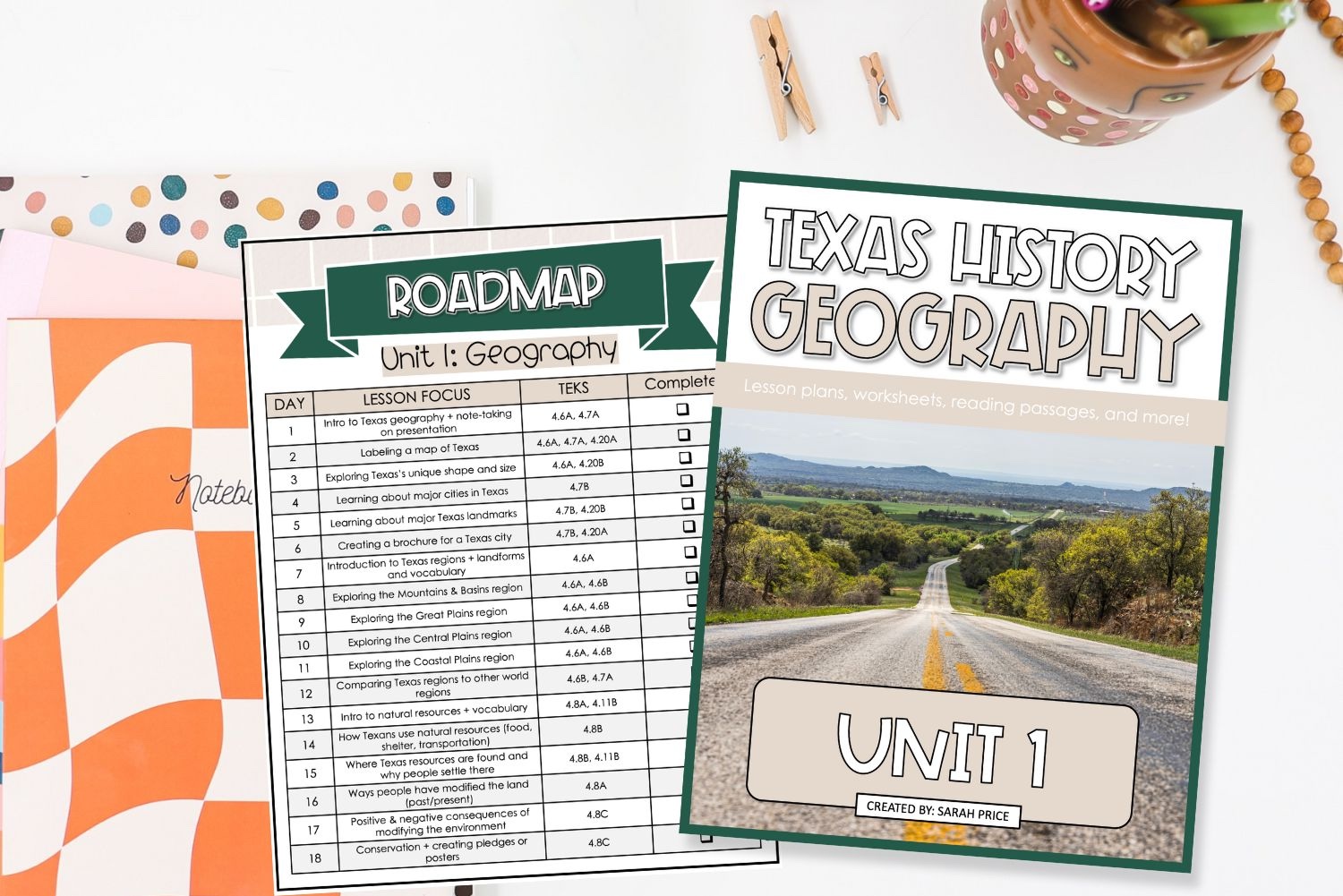
Want the ready-to-teach version? Explore the complete 4th Grade Texas Geography Curriculum with 18 TEKS-aligned lesson plans, activities, printables, and assessments.
What the Texas Social Studies TEKS Actually Expect You to Teach in Geography
Before we talk strategies, let’s get clear on what’s actually required.
The 4th grade Texas social studies TEKS ask students to do more than memorize maps. Students need to understand Texas geography, recognize patterns, and explain why places developed the way they did.
Here’s what that looks like in plain teacher language:
- Identifying and comparing the physical regions of Texas
- Explaining why cities and towns developed where they did
- Understanding the physical geography of Texas, including landforms and climateExploring how people adapt to and modify the environment
- Using maps, legends, grid systems, and symbols to interpret information
In other words, this isn’t a one-day “label the map and move on” situation. Geography is layered, connected, and meant to be taught with intention.
Why Random Geography Lessons Don’t Work (Ask Me How I Know)
We’ve all been there.
You find a decent geography lesson online. Then another one. Then a third that kind of fits. Before you know it, you’ve got five activities that don’t really connect, and you’re still not 100% sure which Texas social studies TEKS you actually covered.
The problem isn’t you.
The problem is disconnected geography lessons.
When geography is taught in isolation:
- Students struggle to make connections
- Important standards slip through the cracks
- Learning turns into memorization instead of understanding
What works better? Teaching geography as a structured 4th grade Texas geography unit where skills build on each other and every lesson has a purpose.
One Fun, Simple Texas Geography Unit That Covers the TEKS
This is where teaching Texas geography gets easier.
Instead of treating geography like a bunch of separate topics, it helps to organize it into three clear focus areas that naturally align with the Texas social studies TEKS:
When those three pieces are taught together, students start to see the why behind the map, and that’s where real learning happens.
This is the same structure used in my 4th Grade Texas Geography Curriculum. It includes 18 TEKS-aligned lesson plans, presentations, printable activities, and assessments so you can teach the complete unit without piecing resources together.
Regions of Texas: Where Geography Finally Makes Sense
Let’s start with the foundation.
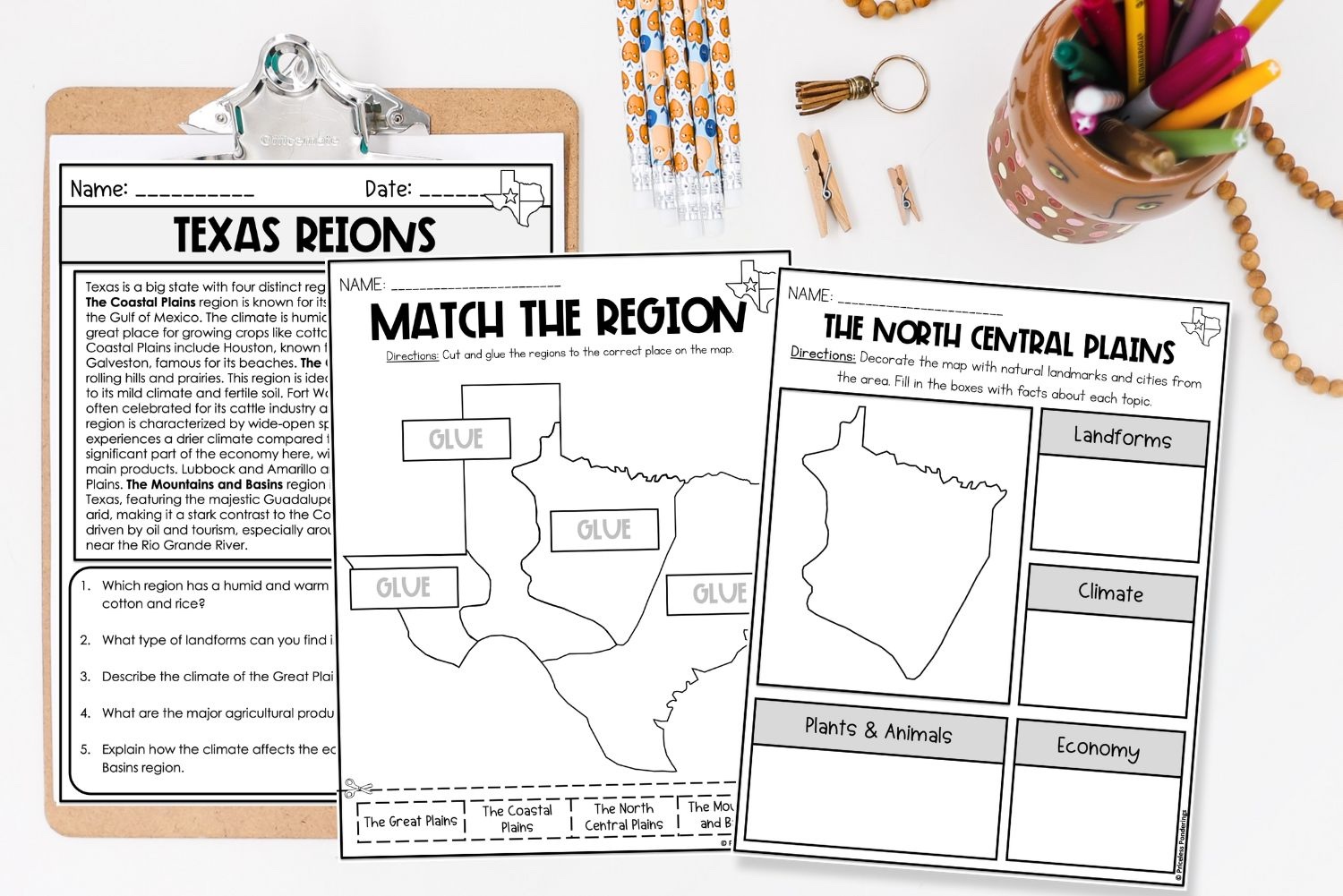
Teaching the four regions of Texas is about more than naming them. Students need to understand how each region is different, including:
- Landforms
- Climate
- Vegetation
- Economic activities
When you pair maps with visuals, vocabulary support, and comparison activities, students begin to understand why West Texas looks different from East Texas and why those differences matter.
This part of the unit focuses heavily on Texas physical geography, helping students connect land, climate, and location to how people live and work across the state.
👉 If you’re looking for a ready-to-use option with maps, visuals, and comparison activities, this is exactly what I built into my Regions of Texas Unit.
Cities and Landmarks: Geography Meets Real Life
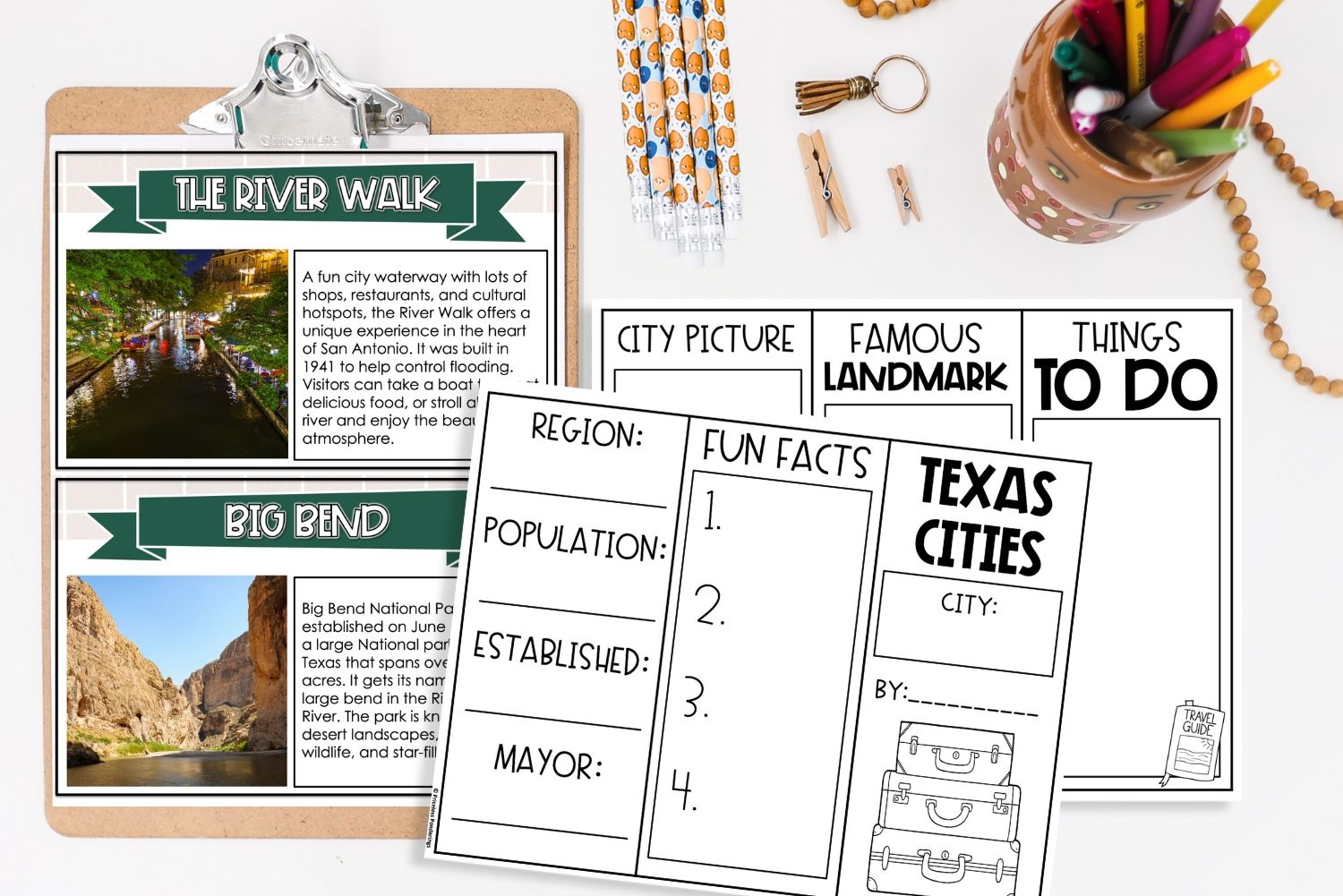
This is where geography becomes personal.
Instead of just pointing to dots on a map, students explore:
- Why cities developed where they did
- How important Texas landmarks connect to geography and history
- How settlement patterns changed over time
Through map activities, visual slides, and writing prompts, students begin to see Texas as a place with stories, not just names to memorize. This is also where map skills really shine because students are constantly using geographic tools in meaningful ways.
👉 If you want a ready-to-use resource that combines mapping, landmarks, and writing, my Texas Cities & Landmarks Unit follows this same approach and can save you a lot of planning time.
Natural Resources: How Texans Shape the Land
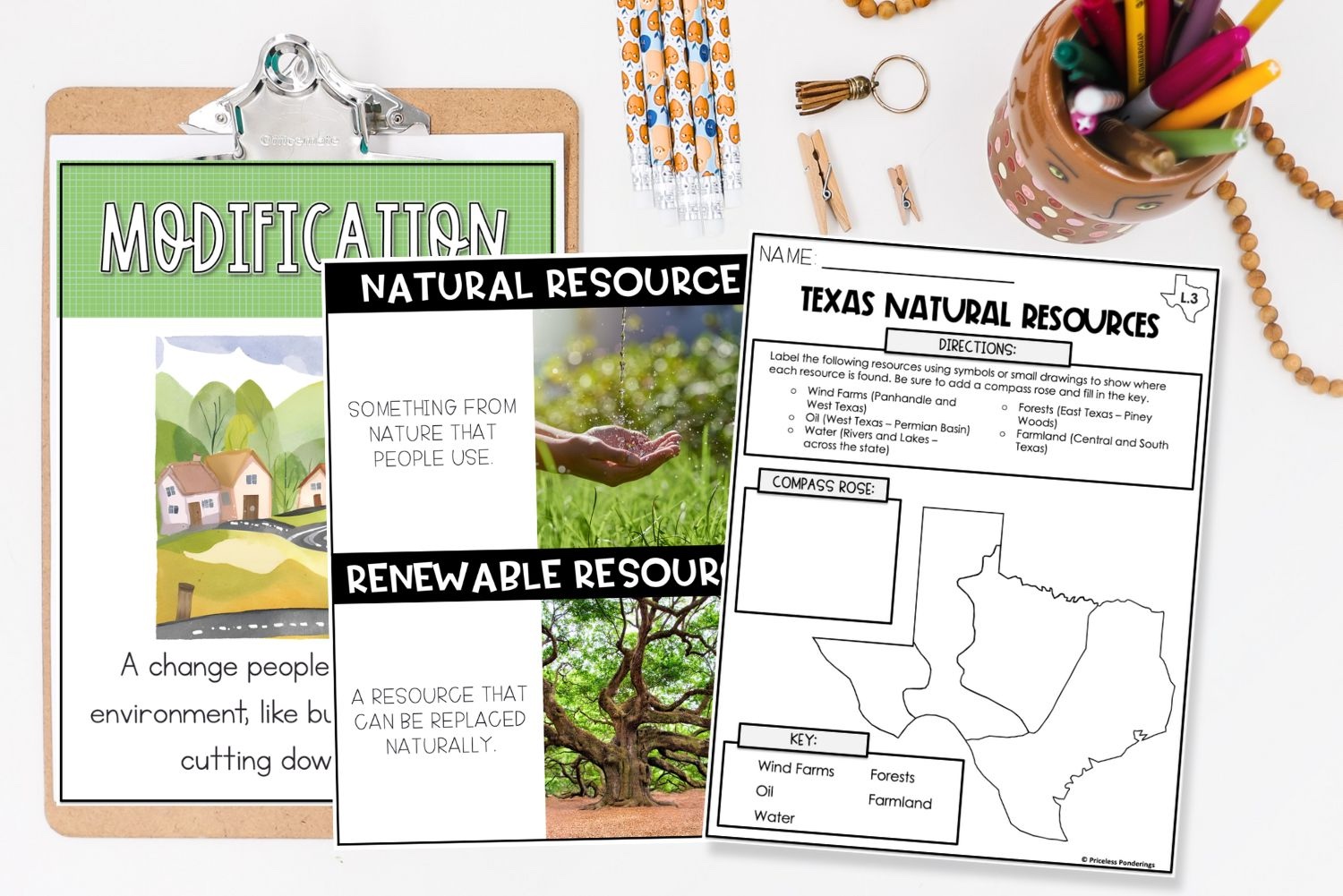
This is often the most eye-opening part for students.
They explore:
- How Texans use natural resources to meet their needs
- Ways people modify the environment, including farming, drilling, dams, and timber
- The positive and negative effects of those changes
These lessons naturally blend geography, economics, and critical thinking, and they usually lead to some really good classroom conversations.
👉 Ready to make natural resources easier to teach? My Texas Natural Resources Unit includes step-by-step lessons, activities, and printables that help students connect resources, economics, and human-environment interaction.
WHAT YOU ACTUALLY GET IN THIS TEXAS GEOGRAPHY CURRICULUM
This isn’t a “here’s a worksheet, good luck” kind of resource.
The 4th Grade Texas Geography Curriculum includes:
- 18 Texas social studies lesson plans aligned to the TEKS
- Teacher-friendly Canva presentations
- Printable worksheets and comprehension activities
- Vocabulary cards and graphic organizers
- Writing prompts and cross-curricular tasks
- End-of-unit quizzesPosters and classroom visuals
- Print-and-teach formatting
It works well for:
- Weekly social studies instruction
- Cross-curricular reading and writing
- Review and test prep
- Homeschool instruction
- Emergency sub plans
Every lesson is clearly connected to the Texas social studies TEKS, so you know exactly what you’re covering and how the pieces fit together.
You’re Not Behind—You Just Need a Clear Plan
If geography has felt overwhelming, it’s not because you’re doing something wrong.
The TEKS are dense, your time is limited, and nobody handed you a magic roadmap.
The good news? You don’t need more random resources. You need one clear plan.
When geography is taught in a connected sequence, students understand more, retain more, and you spend a lot less time piecing things together.
Ready to Make Texas Geography Easier to Teach?
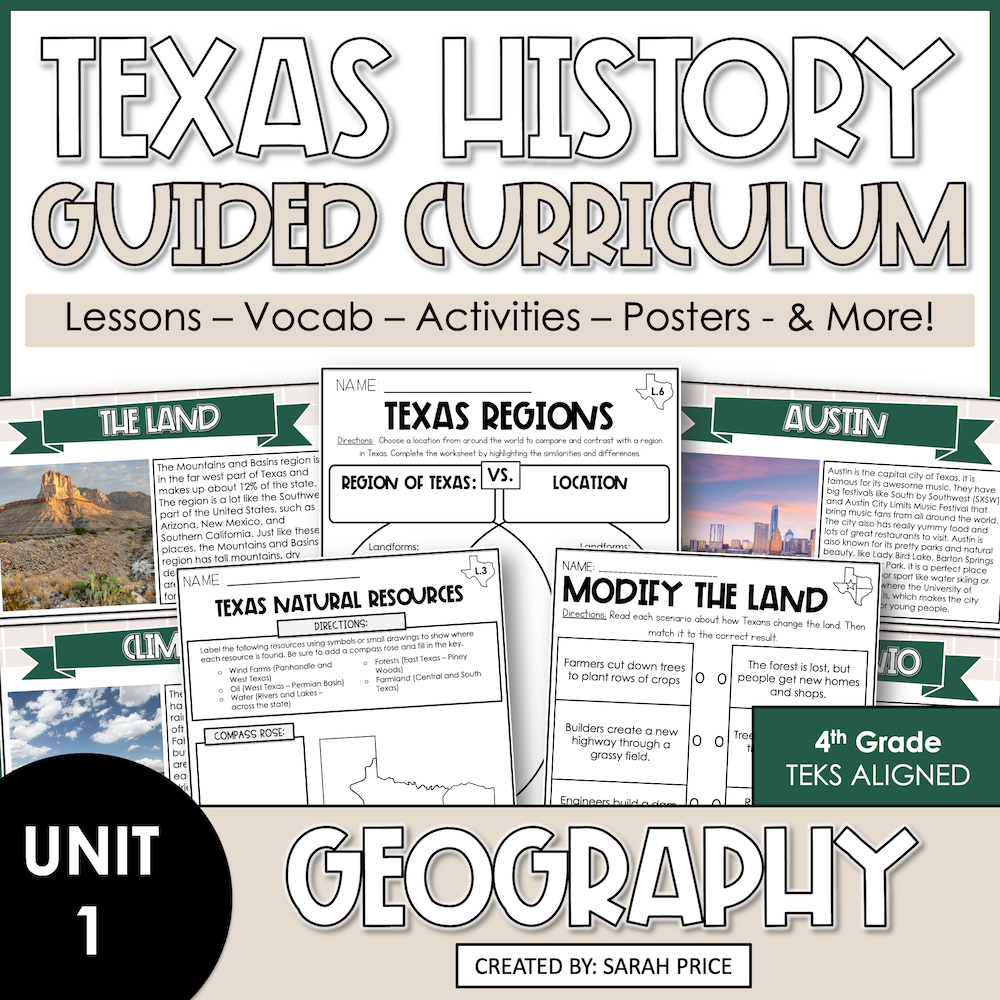
Ready to stop piecing together geography lessons?
👉 Explore the complete 4th Grade Texas Geography Curriculum on TPT.
You’ll get 18 TEKS-aligned lessons, Canva presentations, printables, vocabulary support, quizzes, assessments, and classroom visuals—all organized into one easy-to-teach unit.
For More Ideas, Visit These Posts!
HOW TO FIND TIME FOR SOCIAL STUDIES: FUN STRATEGIES FOR BUSY TEACHERS